Picking the wrong cutting method can cost you more than just money. It can mean rework, poor edge quality or a finished part that simply doesn’t meet spec. Most guides on this topic give you a generic pros and cons table and leave you none the wiser. This one goes a step further, helping you match each method to the type of job you’re actually running.
How Each Process Actually Works
Laser cutting fires a focused beam of light, typically from a fibre laser source, at the material surface. The beam melts and vaporises a very narrow strip of metal along a computer guided path. The kerf (cut width) is usually between 0.1 mm and 0.3 mm, which is what gives laser cut parts their clean, tight tolerance edges. If you want a deeper look at the mechanics behind it, the guide on how laser cutting works covers the full process in detail.
Plasma cutting works differently. It passes an electrically conductive gas, often compressed air or nitrogen, through a torch at high speed, creating a superheated plasma arc that melts through the metal. The kerf is wider, typically 1 mm to 3 mm and the heat affected zone around the cut is larger.
Both are CNC controlled processes, so both can handle complex shapes from a digital file. The difference shows up in what happens to the metal during and after cutting.
Laser vs Plasma Cut Quality: Where the Gap Matters Most
This is where the difference between laser and plasma cutting becomes most obvious for engineers and fabricators.
Laser cutting produces:
- Narrow kerf with minimal material waste
- Smooth, square edges that often need no secondary finishing
- A small heat affected zone, reducing distortion on thin sheets
- Tolerances as tight as ±0.1 mm on well maintained machines
Plasma cutting produces:
- Wider kerf with a slightly bevelled edge angle (typically 3–5°)
- A rougher edge that may need grinding or deburring before assembly
- More thermal distortion on materials under 6 mm thick
- Practical tolerances around ±0.5 mm to ±1 mm depending on setup
For structural components where edge finish matters less, plasma is often fine. For parts that go straight from the cutting bed to assembly, brackets, enclosures and precision sheet metal fabrication work, laser is the cleaner option.
Which Cutting Method is Better for Thick Metal?
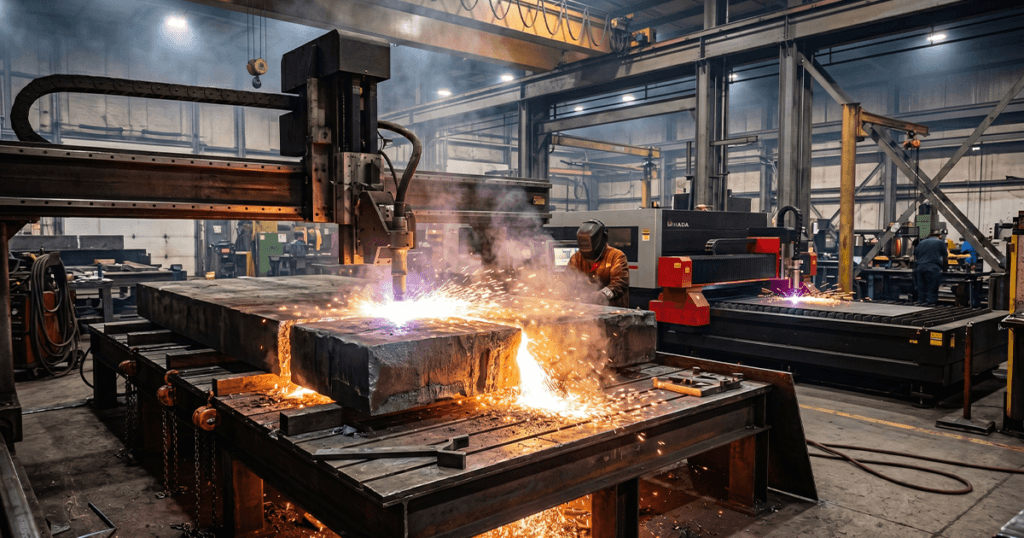
This is the one area where plasma consistently has the edge. Plasma cutting handles steel up to 80 mm thick without significant difficulty and it does so faster than any fibre laser at those thicknesses. Fibre lasers have improved enormously. Modern high power machines can cut up to 30–40 mm in mild steel but at the upper end of that range, plasma is still faster and cheaper to run.
A practical rule of thumb used in UK fabrication shops:
- Up to 6 mm: Laser cutting wins on speed, finish and accuracy
- 6 mm to 25 mm: Either method works. Laser gives better quality, plasma cuts costs
- Above 25 mm: Plasma is generally the more practical and cost effective choice
Fibre laser vs plasma cutting on steel specifically comes down to thickness and volume. For plasma vs laser cutting steel in structural or heavy duty applications, plasma remains the go-to above 20–25 mm.
Laser Cutting vs Plasma Cutting Cost
Plasma systems are cheaper to buy and cheaper to maintain. The consumables, including electrodes, nozzles and shields, are inexpensive and straightforward to replace. This makes plasma well suited to high volume, repetitive jobs where the priority is throughput rather than surface finish.
Fibre laser machines carry a higher capital cost and the per hour operating cost is also higher. That said, on thinner gauges, laser cuts faster and with less waste, which can offset the difference when you factor in:
- Reduced secondary operations (no deburring, less grinding)
- Less material loss from wider plasma kerf
- Lower reject rates on tight tolerance parts
For most contract cutting enquiries, laser cutting service pricing reflects these efficiencies. The cost per part can be competitive even if the machine hour rate looks higher on paper.
What Materials Can Each Method Cut?
This is a practical distinction that doesn’t always get covered properly.
Laser cutting handles
- Mild steel, stainless steel, aluminium
- Copper and brass (with fibre laser, not CO₂)
- Non metals: acrylic, wood, some plastics and composites
Plasma cutting handles
- Any electrically conductive metal: mild steel, stainless steel, aluminium, copper, cast iron
- Cannot cut non conductive materials at all
If your project involves a mix of metals and non metals or if you’re cutting copper and brass, a fibre laser is the only option of the two.
Choosing the Right Method for Your Project
Rather than a generic verdict, here’s how to think through the decision.
Choose laser cutting if:
- Your material is under 20 mm thick
- You need tight tolerances or a clean edge for direct assembly
- You’re cutting non metals or reflective metals like copper
- Part complexity is high, such as intricate profiles, small holes and fine features
- You want to minimise post processing time
Choose plasma cutting if:
- You’re working with thick structural steel above 25 mm
- Edge finish is secondary to throughput
- You’re running large and simple profiles at high volume
- Budget for machine time is a firm constraint
For anything where precision engineering London standards apply, close tolerance components, aerospace sub assemblies or parts requiring post weld inspection, laser is the right call.
Need Help Choosing Between Laser & Plasma Cutting?
Selecting the right cutting process can improve part quality, reduce production costs and minimise lead times. Our experienced engineers will recommend the most suitable solution based on your material, thickness, tolerances and project requirements.

Frequently asked questions (FAQs)
What is the difference between laser cutting and plasma cutting?
Laser cutting uses a focused beam of light to melt and vaporise metal along a precise path, producing a narrow kerf and clean edges. Plasma cutting uses superheated ionised gas to melt through metal, making it faster on thick materials but with a rougher finish and wider cut.
Which is better, plasma or laser cutting?
Neither is universally better. Laser cutting is the stronger choice for precision, thin gauges and clean edges. Plasma cutting is better suited to thick steel, high-volume structural work and lower upfront costs. The right answer depends on material thickness, tolerances and budget.
Which cutting method is better for thick metal?
Plasma cutting handles thick metal, particularly above 25 mm, more efficiently than laser. It maintains cutting speed at higher thicknesses and costs less to run on heavy gauge steel. Some high-power fibre lasers can cut up to 40 mm but plasma remains faster at those extremes.
Is laser cutting faster than plasma cutting?
On thin sheet metal (under 6 mm), laser cutting is generally faster and more accurate. On a thick plate above 20 mm, plasma has the speed advantage. For mid-range thicknesses, it depends on the specific machine and material.
What materials can be cut using laser cutting and plasma cutting?
Laser cutting works on metals, acrylic, wood, plastics and composites. Plasma cutting is limited to electrically conductive metals like steel, aluminium, copper and stainless steel. For non metals or mixed material jobs, laser is the only viable option.